

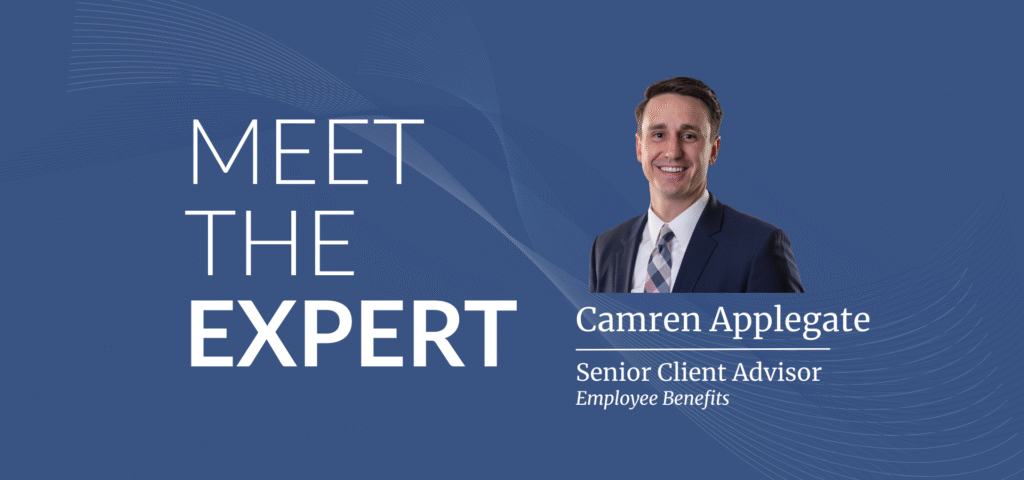
Written by Camren Applegate
Navigating the Complexity of Employee Benefits
My role as an Employee Benefits advisor is to help clients navigate the complexity of employee benefits in a way that supports both their financial goals and the wellbeing of their employees. That means developing customized strategies, staying informed on regulatory changes, and providing ongoing support through annual reviews and adjustments as organizations evolve.
Employee benefits are not a set it and forget it program. Workforces change, costs rise, and expectations shift. My focus is helping employers adapt their benefits strategy over time so it continues to make sense for their organization and their people.
The Clients I Work with and Why Strategy Matters
I primarily work with mid sized organizations across a variety of industries, including construction, manufacturing, and healthcare. Each industry and each workforce comes with its own challenges, and each demographic requires a different strategic approach.
What works for one organization may not work for another. My job is to understand how a company operates, who their employees are, and what they are trying to accomplish. From there, we can build a benefits strategy that aligns with their goals instead of forcing them into a one size fits all solution.
Trends Shaping Benefits Programs in 2026
Looking ahead, several trends that are emerging in 2025 will continue to shape benefits programs in 2026. There is a growing emphasis on mental health support and virtual healthcare solutions as employers look for accessible ways to support employees while managing costs.
We are also seeing more interest in data driven personalization of benefits offerings and sustainable long term practices. Employers want better insight into how their benefits are being used and how those decisions impact both employees and the organization over time. Pharmacy transparency continues to be a major focus as employers search for clarity and control around one of the fastest growing areas of healthcare spend.
Rethinking Renewals and Open Enrollment
One of the most important things employers can do is start the renewal process earlier than they think. And by early, I do not mean ninety days before renewal. Strategy and concepts should be decided before renewal numbers are released.
A strong renewal starts with analyzing claims and benefits utilization from the previous year and asking what strategies can be implemented to bring those costs down. Employee feedback is also critical. Engaging employees helps ensure the benefits being offered are actually valued.
Benchmarking is another key component. Employers should understand how their program compares within their market and industry and decide where they want to be in that benchmark. I also encourage clients to get out of the twelve month mindset and look at their benefits strategy over a five to ten year period. Long term planning leads to more thoughtful decisions and better outcomes.
Asking Better Questions During Renewal
During renewal discussions, employers should be asking how market changes are impacting their renewal rates, what new benefit options are available, and what strategies exist to optimize their benefits package while controlling costs. These conversations should happen well before renewal arrives so there is time to be proactive rather than reactive.
Planning for the Year Ahead
When planning for the new year, employers should start by aligning their benefits strategy with company goals and employee needs. Flexibility, transparency, and innovation are becoming increasingly important, and employee surveys can provide valuable insight to help guide decision making.
Programs such as telemedicine, Direct Primary Care, and wellness initiatives that focus on holistic health continue to grow in popularity. Self funded captives are also something midsized and larger employers should explore to determine whether they align with their needs and long term goals.
The Buckner Approach
At Buckner, we believe employee benefits should support the long term success of both the organization and its employees. Our approach is rooted in relationships, ongoing education, and strategy that evolves as our clients evolve. We work alongside employers, not just at renewal, but throughout the year to ensure their benefits program continues to serve its purpose.
My Purpose
What I enjoy most about helping clients with Employee Benefits is contributing to their success by providing solutions that enhance employee satisfaction and organizational health. Building lasting relationships while helping employers navigate a complicated and ever changing environment is something I find incredibly rewarding.
If there is one thing I want clients to remember, it is that you cannot be afraid to disrupt your benefits program if you want different outcomes. It is okay to require employees to have some skin in the game to drive strategic change. Benefits that add tangible value to employees’ lives lead to engagement, satisfaction, and productivity, which ultimately benefits the entire organization.
Contact Camren
Ready to take a more strategic approach to Employee Benefits? Contact Camren Applegate at capplegate@buckner.com or 801.866.0836 to start the conversation.