


Written by Buckner Marketing Team
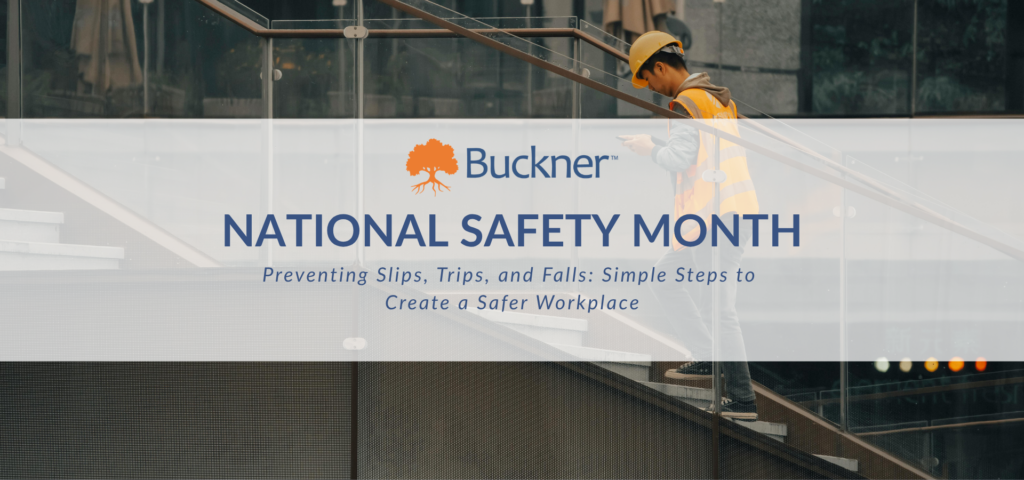
Preventing Slips, Trips, and Falls: Simple Steps to Create a Safer Workplace
As National Safety Month comes to a close, Week 4 focuses on one of the most common causes of workplace injuries: slips, trips, and falls. While these incidents may seem minor compared to other workplace hazards, they can lead to serious injuries, lost productivity, workers’ compensation claims, and increased costs for employers.
The good news is that most slip, trip, and fall incidents are preventable. By identifying common hazards and implementing proactive safety measures, organizations can significantly reduce risk and create a safer environment for employees.
Why Slip, Trip, and Fall Prevention Matters
Every workplace contains potential hazards that can contribute to slips, trips, and falls. Whether it’s a wet floor, an extension cord across a walkway, poor lighting, or an uneven surface, small issues can quickly result in injuries if left unaddressed.
Beyond the physical impact on employees, these incidents can affect operations, increase claim costs, and contribute to lost work time. Preventing them requires a consistent focus on workplace awareness and hazard management.
Common Causes of Slips, Trips, and Falls
Some of the most common contributors include:
- Wet or slippery floors
- Cluttered walkways
- Loose cords or cables
- Uneven flooring or pavement
- Poor lighting
- Damaged stairs or handrails
- Weather-related hazards such as rain, snow, and ice
- Inappropriate footwear
Recognizing these risks is the first step toward preventing injuries.
Practical Prevention Strategies
Maintain Clear Walkways
Keep hallways, aisles, stairways, and exits free from clutter and unnecessary obstacles. Materials, equipment, and cords should be stored properly and away from walking paths.
Address Hazards Immediately
Spills, damaged flooring, loose mats, and other hazards should be corrected as soon as they are identified. Temporary warning signs can help reduce risk until repairs are completed.
Improve Housekeeping Practices
Routine cleaning and workplace inspections help identify potential hazards before they cause an incident. Good housekeeping is one of the most effective tools for preventing slips, trips, and falls.
Ensure Adequate Lighting
Employees should be able to clearly see potential hazards. Regularly inspect indoor and outdoor lighting, replacing bulbs and addressing dark areas as needed.
Prepare for Weather Conditions
Rain, snow, and ice can create hazardous conditions around entrances, parking lots, and sidewalks. Organizations should have procedures in place to address seasonal weather risks promptly.
Encourage Employee Participation
Employees are often the first to notice unsafe conditions. Encourage reporting and create a culture where safety concerns are addressed quickly and effectively.
Safety Beyond the Workplace
Slip, trip, and fall hazards are not limited to the workplace. Similar risks exist at home, including cluttered walkways, poor lighting, loose rugs, and slippery outdoor surfaces. Promoting awareness both on and off the job helps reinforce safe habits and reduce injuries wherever employees spend their time.
Building a Stronger Safety Culture
Effective safety programs focus on prevention rather than reaction. By identifying hazards, encouraging employee involvement, and maintaining safe work environments, organizations can reduce incidents and protect their most valuable asset: their people.
At Buckner, we believe proactive risk management is key to creating safer workplaces and stronger organizations. Taking steps today to prevent slips, trips, and falls can help reduce injuries, control costs, and support long-term success.